search
Search

Enter keywords to search for products, blog posts, and more.

English
Dry Type Transformer

Dry Type Transformer

Cast Resin Dry Type Transformers — 10kV to 35kV

Cast Resin Dry Type Transformers — 10kV to 35kV

Cast Resin Type Transformer Dry Type Distribution Transformer Power Transformer Three-Phase Class F Insulation AN Self-Cooled 50Hz / 60Hz IEC 60076-11

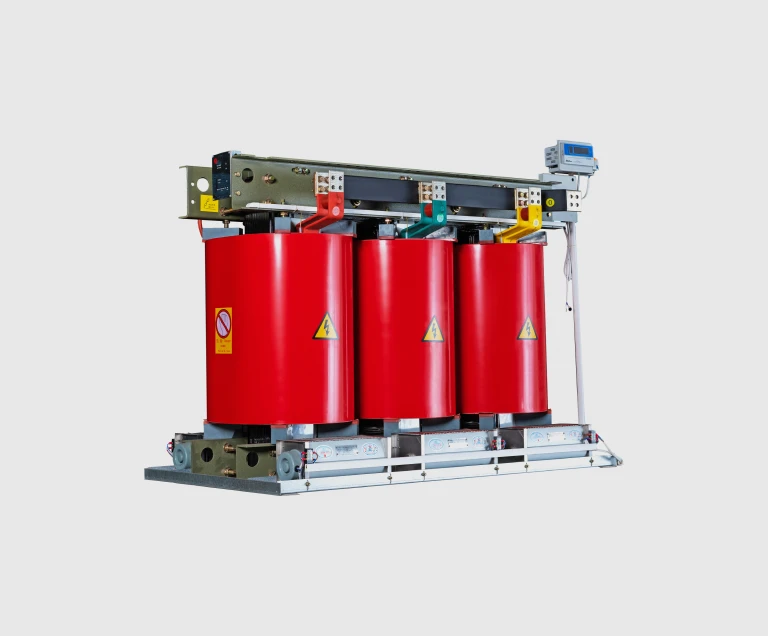
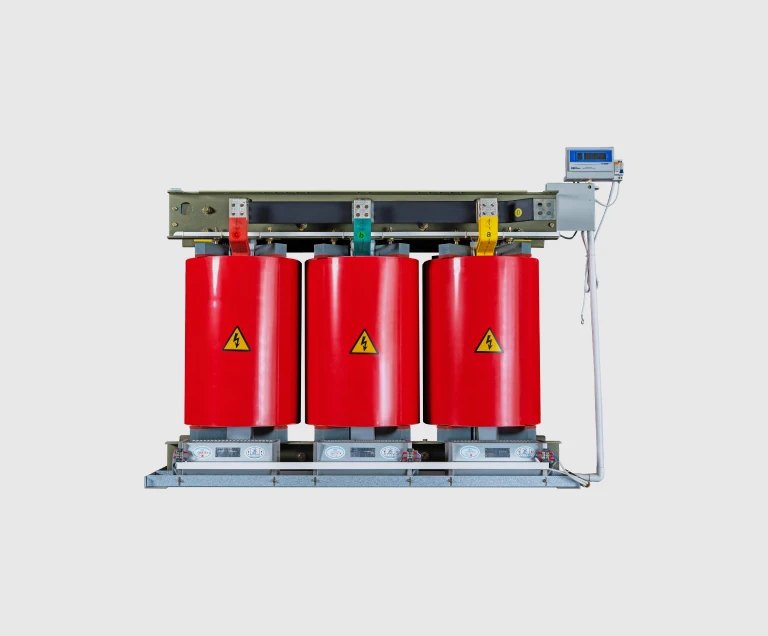
EverWins manufactures dry type transformers in the cast resin construction (type SC(B) series), with rated input voltages from 10kV to 35kV and capacities from 30 kVA up to 20,000 kVA. The complete core-and-coil assembly is vacuum-cast in solid epoxy resin, eliminating insulating oil and the fire risk that comes with it. These units are built for indoor installation in commercial buildings, hospitals, data centers, and industrial substation rooms, with outdoor enclosed versions available for utility and infrastructure projects. Three-phase configurations are standard, with Dyn11 or Yyn0 winding connections in 50 Hz or 60 Hz.


Service & Delivery

• MOQ: 1 unit for standard configurations

• Lead time: confirmed at quotation, based on capacity, voltage class, and customization scope

• Shipping: FOB, CIF, or DDP terms supported; export-grade packaging for sea shipment

• Custom support: single-line diagram review, drawing approval, factory acceptance test (FAT) witness available

• After-sales: technical support via email, phone, or video call; English-speaking engineering team; commissioning guidance

• Warranty: standard manufacturer warranty as detailed in commercial offer

Specifications

ParameterSpecification
Rated Input Voltage10 / 11 / 15 / 20 / 22 / 33 / 35 kV
Rated Output Voltage0.4 kV or 11 kV
Rated Capacity30 – 20,000 kVA (standard steps: 100, 250, 400, 630, 1000, 1600, 2500 kVA)
PhaseThree-phase (single-phase available on request)
Frequency50 Hz or 60 Hz
Winding Connection (Vector Group)Dyn11 or Yyn0 (others on request)
HV Tapping Range±5% or ±2 × 2.5% (off-circuit)
Cooling MethodAN (air natural) standard; AF (air forced) for overload uplift
Insulation ClassF (155 °C) standard; H (180 °C) on request
Winding MaterialCopper foil (standard) or aluminum
EncapsulationSolid cast epoxy resin, vacuum molded
Core MaterialCold-rolled grain-oriented silicon steel
Enclosure ProtectionIP00 (open) / IP21 / IP23 / IP31 indoor; IP54 / IP55 outdoor enclosure
Climatic / Environmental / Fire ClassC2 / E2 / F1 per IEC 60076-11
Partial Discharge (routine test)≤ 10 pC at 1.1 × rated voltage
StandardsIEC 60076-11 (international); GB/T 1094.11 (China)
Ambient Temperature−25 °C to +40 °C (special designs for hotter or colder climates)
Altitude≤ 1,000 m standard; derating available for higher altitudes
Temperature MonitoringPT100 sensors per phase with alarm and trip relay (standard)


Dry Type Transformer Product Range


Cast Resin Vacuum Encapsulation and Engineering

Every winding is vacuum-cast in solid epoxy resin under controlled temperature and pressure. The vacuum stage draws out air pockets before resin filling, producing a void-free insulation that maintains low partial discharge throughout the service life. Copper foil construction gives uniform current distribution across the winding height and shorter axial fault forces compared with wire windings. The core uses cold-rolled grain-oriented silicon steel for low no-load loss. PT100 temperature sensors are mounted on each phase as standard, with alarm and trip relay output for integration into building management systems.

• Vacuum-cast solid epoxy resin, void-free encapsulation

• Copper foil winding for uniform current distribution and improved short-circuit withstand

• Cold-rolled grain-oriented silicon steel core for low no-load loss

• Class F (155 °C) insulation system; Class H (180 °C) on request

• PT100 temperature sensors per phase, with alarm and trip relay output

• C2 / E2 / F1 climatic, environmental, and fire classification per IEC 60076-11


Full Testing Before Shipment

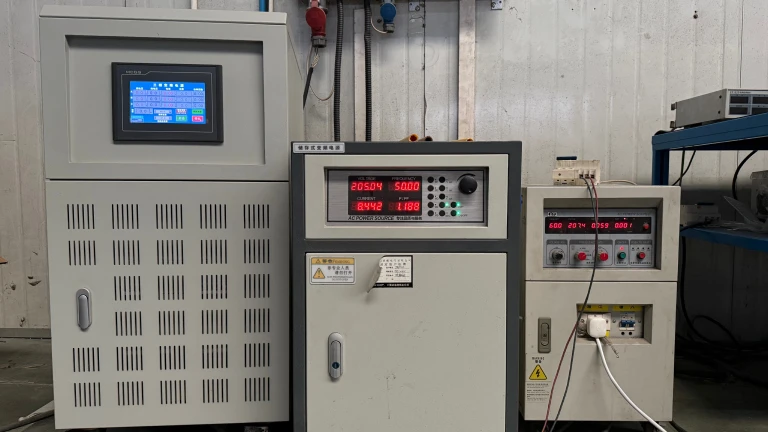
We run routine tests on every cast resin dry type transformer before it leaves the factory. This includes turns ratio, winding resistance, insulation resistance, no-load and load loss measurement, induced overvoltage withstand, applied voltage withstand, and partial discharge measurement at 1.1 times rated voltage. Partial discharge must hold below 10 pC under IEC 60076-11 — a value far below the threshold for oil immersed designs, and the single most important quality indicator for cast resin construction. For projects that require it, we also perform temperature rise tests, short-circuit withstand verification, and lightning impulse tests. All test data is documented and included with shipment in a factory acceptance test (FAT) report. Customers may witness the FAT in person or by live video link.


Configured to Your Installation

Dry type transformer specifications change significantly with the installation environment. A unit going into a hospital basement faces different requirements than one mounted in a coastal outdoor substation. We configure each order to the specific site — IP rating to match the installation method, insulation class for the ambient temperature range, enclosure colour and accessories, temperature alarm and trip thresholds, and special climatic protection (C2 for condensation environments, E2 for heavy pollution, F1 fire class for buildings with strict fire codes). Renewable generation projects often need a step-up version with the low-voltage winding rated for inverter output; we build these on the same SC(B) platform. You provide the project conditions; we engineer the equipment.

More About everwins

EverWins is a transformer, switchgear and substation manufacturer based in Guangdong, China. With 30 years in the power transmission and distribution industry and a 70,000m² production facility, we supply factory-direct to projects in over 30 countries.

About Us Certifications Solutions

FAQs

What is the difference between dry type and oil immersed transformers?

What is the difference between cast resin and VPI dry type transformers?

A dry type transformer uses air and solid insulation — typically cast epoxy resin — instead of oil to insulate and cool the windings. There is no liquid to leak, no fire risk from oil, and no breather to maintain. Oil immersed transformers handle higher voltages and dissipate heat better, which makes them more economical above roughly 5,000 kVA and the default choice for outdoor pad installations. Dry type is required by many building codes for indoor installations in commercial buildings, hospitals, data centers, and high-rise residential, where the fire and environmental risks of oil are unacceptable.

Can dry type transformers be installed outdoors?

Cast resin transformers (also called epoxy cast or cast coil) have each winding completely encapsulated in cured epoxy resin under vacuum, creating a void-free monolithic block. They offer high moisture resistance, strong short-circuit withstand, and the F1 fire classification per IEC 60076-11. VPI (Vacuum Pressure Impregnated) transformers have windings impregnated with insulating varnish under pressure, sealing the winding surface but not encapsulating it. VPI is generally cheaper and used for low-voltage applications, while cast resin is the standard for medium-voltage 10kV-and-above applications where partial discharge performance and moisture resistance are critical. EverWins produces the cast resin construction.

What is the difference between a dry type step-down and step-up transformer?

Yes, with the right enclosure. Standard dry type transformers ship in open or ventilated cubicle construction (IP00 to IP31) and are intended for installation in a protected indoor room. For outdoor installation, the transformer is housed in a sealed sheet-steel enclosure with weather-proof louvers, typically rated IP54 or IP55, with temperature-controlled forced-air ventilation. Outdoor cast resin units cost more than indoor units of the same rating but eliminate the building space requirement of an indoor substation room — often a net saving on the overall project.

What is the typical service life and maintenance schedule for a dry type transformer?

The same physical transformer can serve as either step-down or step-up — the difference is which winding connects to the higher-voltage source. A step-down transformer takes higher voltage on the primary (typically 11kV or 33kV) and outputs lower voltage on the secondary (typically 0.4kV), which is the standard distribution application for building and industrial loads. A step-up transformer reverses this, taking lower-voltage generation output (typical of solar inverters or small generators at 0.4 kV or 0.69 kV) and stepping it up to grid voltage for export. Both directions use identical SC(B) cast resin construction; the rated voltages, vector group, and impedance are selected per the application direction at order stage.

Dry Type Transformer: Technical Guide

How a Dry Type Transformer Works

A dry type transformer operates on the same electromagnetic induction principle as any other transformer, but without insulating oil. The core-and-coil assembly sits in air, with the windings insulated by solid materials — usually cast epoxy resin around medium-voltage windings and high-temperature impregnating varnish or thermal-class films around low-voltage windings. Heat generated in the core and windings dissipates directly into the surrounding air, either by natural convection (AN cooling) or by forced air from temperature-controlled fans (AF cooling). The absence of oil means no fire risk from a leaking or rupturing tank, no environmental hazard from oil spills, and no oil sampling or testing requirements over the life of the unit.

Cast Resin vs VPI — Two Construction Methods

Dry type transformers come in two main construction types, each with different applications and price points.

Cast resin transformers, sometimes called epoxy cast or cast coil, have each winding completely encapsulated in cured epoxy resin. The winding is wound onto a mandrel, placed in a precision mold, evacuated to remove all air, then injected with degassed epoxy that cures into a solid void-free block around the conductor. This produces a winding that is essentially impervious to moisture, dust, and minor mechanical impact, with partial discharge values low enough to meet IEC 60076-11 medium-voltage requirements. Cast resin is the standard for 10 kV and above.

VPI (Vacuum Pressure Impregnated) transformers use a different approach. The wound coils are placed in a vacuum chamber, evacuated, then flooded with insulating varnish under pressure, forcing varnish into every gap in the winding before curing. The result is a winding sealed against moisture but not encapsulated. VPI is cheaper to produce and well-suited to low-voltage and some medium-voltage applications in mild environments.

EverWins produces the cast resin construction, which is the appropriate choice for the 10 kV to 35 kV voltage class our product range serves.

Indoor vs Outdoor Installation

Standard cast resin dry type transformers ship in either open-type (IP00) or ventilated cubicle (IP21 / IP23 / IP31) construction, both intended for installation inside a protected building room. The room provides weather protection, while the transformer's louvered cubicle keeps personnel safe from contact with energized parts and allows air convection for cooling.

For outdoor installation, the same core-and-coil assembly is housed in a sealed sheet-steel enclosure rated IP54 or higher, with weather-proof inlet and outlet louvers and forced-air cooling fans triggered by winding temperature. This adds roughly 15 to 25 percent to the unit cost but eliminates the need for a dedicated indoor substation room — usually a substantial space and construction saving for the project.

The choice between indoor and outdoor configuration is normally driven by available floor space, local fire codes, and total project economics, not by transformer performance. A dry type transformer in an outdoor enclosure delivers the same electrical performance as the same unit in an indoor ventilated cubicle.

How to Specify a Dry Type Transformer

At the quotation stage, you will need to confirm the following parameters. Anything you cannot specify, our engineering team can derive from your single-line diagram and site data.

1. Rated capacity (kVA). Total connected load plus diversity factor plus future expansion. Common standard sizes: 100, 160, 250, 315, 400, 500, 630, 800, 1000, 1250, 1600, 2000, 2500 kVA. Larger units up to 20,000 kVA on request.

2. Rated voltages. Primary (typically 10, 11, 15, 20, 22, 33, or 35 kV) and secondary (typically 0.4 kV for distribution, 0.69 kV for industrial, or 11 kV for sub-transmission).

3. Vector group. Dyn11 is the international default for distribution; Yyn0 is also common, particularly in some Asian markets. Specialty groups available on request.

4. IP rating. IP00 for installation inside larger switchboards; IP21 / IP23 / IP31 for standalone indoor; IP54 / IP55 for outdoor enclosure.

5. Climatic, environmental, and fire class. Per IEC 60076-11: C2 (frequent condensation), E2 (heavy pollution and frequent condensation), F1 (limited fire load and no halogens). Most building applications now require all three.

6. Insulation class. F (155 °C) is standard; H (180 °C) for high-ambient or overload-frequent applications.

7. Cooling method. AN (natural air) standard. AF (forced air) provides overload capability up to roughly 40 percent above the AN rating, useful for sites with sharp load peaks or future expansion.

8. Accessories. Temperature monitoring relay, anti-condensation heaters, electromagnetic shielding for IT-sensitive sites, on-load tap changer if voltage regulation is needed under load.

Dry Type vs Oil Immersed Transformer — Which to Choose?

The choice between dry type and oil immersed is driven primarily by installation environment and applicable building codes, not by electrical performance.

Choose dry type when:

• The installation is indoors, especially in occupied buildings (commercial, hospital, hotel, residential, data center).

• Fire codes restrict or prohibit liquid-filled transformers indoors.

• Environmental risk from oil spills must be eliminated (near water sources, on rooftops, in pristine environments).

• Maintenance access for oil testing is difficult or expensive.

• The application is below 5,000 kVA at distribution voltage levels.

Choose oil immersed when:

• Installation is outdoors with proper pad and oil-containment provisions.

• Capacity exceeds 5,000 kVA, where oil immersed cost advantage grows.

• The voltage level is 66 kV or higher, where dry type becomes impractical.

• Hot ambient conditions favor the better heat dissipation of oil-cooled designs.

For the 30 kVA to 2,500 kVA range used in most commercial and industrial buildings, dry type and oil immersed are technically interchangeable; the choice comes down to where the transformer will sit and what fire and environmental codes apply.

Maintenance and Service Life

A cast resin dry type transformer is one of the lowest-maintenance pieces of major electrical equipment in a distribution system. With no oil and no breather, routine maintenance reduces to:

Visual inspection every 6 to 12 months — check for dust accumulation, discoloration of the resin (a sign of overheating), and physical damage.

Cleaning as needed — blow out dust with dry compressed air or vacuum at scheduled outages. Heavy dust accumulation insulates the windings thermally and accelerates aging.

Infrared thermography under load — scan bushings, tap-changer connections, and the resin surface to catch localized hot spots before they fail.

Temperature sensor verification — confirm PT100 sensors and alarm/trip relay function during annual maintenance.

Tightness check — verify primary and secondary terminations are torqued to specification.

With this routine, a properly specified cast resin transformer reliably delivers 25 to 30 years of service in a typical indoor environment, and 20 to 25 years in a moderate-pollution outdoor enclosure. The dominant failure modes — overheating from blocked airflow and electrical damage from external faults — are preventable through facility-level controls rather than transformer maintenance.