Withdrawable Low Voltage Switchgear: Technical Guide
What Withdrawable Low Voltage Switchgear Is
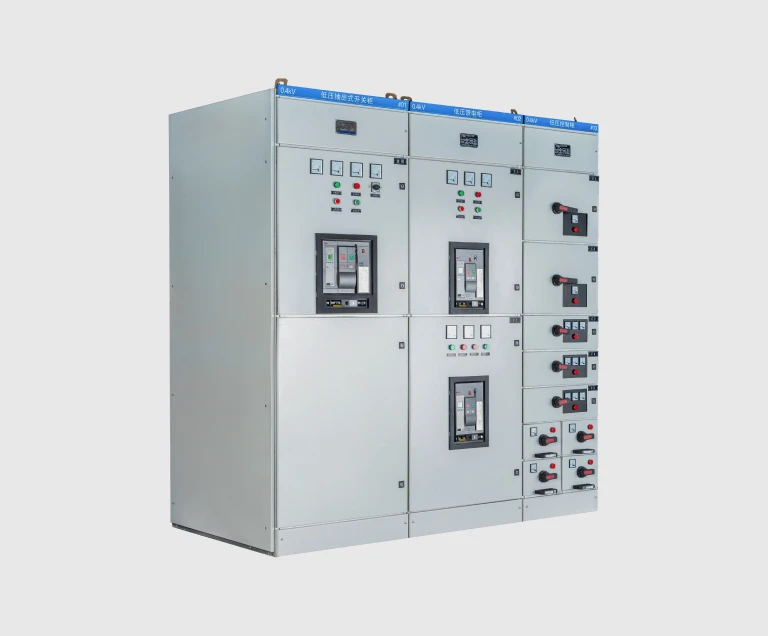
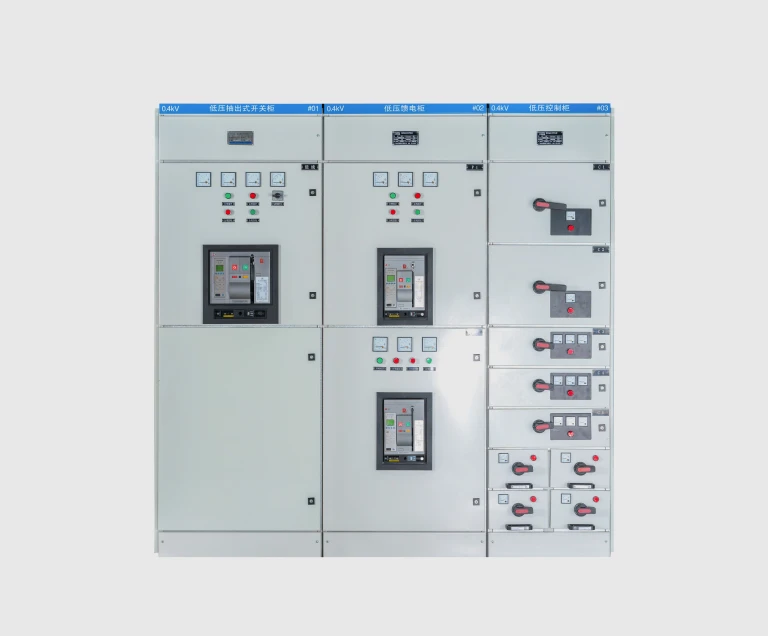
Withdrawable low voltage switchgear is a modular switchboard built around standardized steel drawers. Each drawer holds one complete functional unit — a motor starter, an outgoing feeder breaker, a capacitor bank, or a measurement panel — and racks in and out of the cabinet on rails. When fully racked in, the drawer's rear primary contacts engage the cabinet's fixed busbar contacts and the unit becomes part of the live circuit. When racked out to the test or isolated position, the contacts disengage and the drawer becomes electrically separated from the busbar, with auto-shutters automatically covering the openings to prevent contact with energized parts.
This construction approach is the international standard for industrial low voltage switchgear and motor control centers because it solves the fundamental availability problem of fixed-type switchboards: in a fixed switchboard, replacing a single failed motor starter means de-energizing a section of the switchboard, dismantling the wiring, replacing the equipment, and rewiring — typically a multi-hour outage that may affect adjacent equipment. In a withdrawable switchboard, the failed drawer is racked out, a spare drawer of the same size is racked in, and the motor is back online within minutes — with the rest of the switchboard never losing power.
GCK, MNS, and the IEC 61439-2 Withdrawable Assembly Class
Several type designations refer to drawer-type low voltage switchgear in different markets, and it is worth understanding what they mean.
• GCK is the Chinese GB 7251 designation for a drawer-type withdrawable LV switchgear assembly. The letters break down as G (cabinet), C (withdrawable / drawer-type construction), K (switchgear). The standard is closely harmonized with IEC 61439-2 and GCK products are accepted across Asian, Middle Eastern, African, and many European utility specifications.
• GCS is a related Chinese GB 7251 designation for a similar drawer-type construction with slightly different drawer dimensions and busbar arrangement. GCK and GCS are commercially treated as equivalent product classes.
• MNS is the trade name of a drawer-type LV switchgear system developed by a major European manufacturer in the 1980s. The name became commercially synonymous with the drawer-type construction class, and many international specifications still write "MNS-type" when they mean any drawer-mounted LV switchboard meeting IEC 61439-2 Form 3b or Form 4 separation.
• Type-Tested Assembly (TTA) is the IEC 61439-1 designation for any LV switchgear assembly that has been verified through the full type-test sequence of the standard — temperature rise, dielectric withstand, short-circuit withstand, protection against electric shock, mechanical operation, and others. GCK switchgear is built to this standard and verified through the IEC 61439-2 routine test sequence on every line-up.
In practical terms, GCK, MNS, and similar drawer-type designations describe the same construction class with different product names. The functional behavior — three drawer positions, key interlocking, primary disconnects with auto-shutters, type-tested busbar — is the same.
The Three Drawer Positions and Why They Matter
Every GCK drawer has three defined positions, with a hand crank or motorized racking mechanism moving the drawer between them. The position indicator on the drawer front shows which state the unit is in.
• Connected position — the drawer is fully racked in. Primary contacts at the rear engage the cabinet's fixed busbar contacts, secondary contacts at the front engage the control wiring plug, and the unit is part of the live circuit.
• Test position — the drawer is partially racked out. Primary contacts at the rear are physically separated from the busbar (the drawer cannot pass current to the motor or outgoing cable), but the secondary control contacts at the front remain engaged. This position lets a technician test the control circuit — close the contactor, verify relay logic, exercise the overload trip — without ever putting the motor or outgoing circuit at risk of energization.
• Isolated position — the drawer is fully racked out. Both primary and secondary contacts are disengaged, the auto-shutters have closed across the busbar openings, and the drawer is completely electrically separated from the rest of the switchboard. In this state the drawer can be safely withdrawn from its compartment for inspection, contact maintenance, or replacement.
The position indicator is interlocked with the cabinet door and the racking mechanism, so the operator cannot perform an unsafe sequence — for example, racking the drawer in or out while the main breaker is closed under load. This eliminates the most common cause of low voltage arc flash incidents.
Forms of Internal Separation — Form 1 Through Form 4b
IEC 61439-2 defines five Forms of internal separation that describe how thoroughly the inside of a low voltage switchboard is partitioned. The higher the Form, the more isolated each functional unit is from its neighbors, and the better the protection against fault propagation, accidental contact during live maintenance, and operator error.
• Form 1 — no internal separation. The busbar, functional units, and cable terminals all share a single open cabinet interior.
• Form 2 — busbar separated from functional units by a metal or insulating barrier.
• Form 3 — busbar separated from functional units, and functional units separated from each other.
• Form 4 — busbar, functional units, and cable terminals of each functional unit all separated from each other.
The "a" or "b" suffix specifies the terminal arrangement. In Form 3a or 4a, the outgoing cable terminals sit in the same compartment as their functional unit. In Form 3b or 4b, the terminals are in a separate dedicated terminal compartment, which allows cable work to be performed safely on one circuit while the rest of the switchboard remains energized. Form 4b is the highest separation level commonly specified and is required by many industrial specifications, data center standards, and high-availability infrastructure projects. EverWins GCK is built to Form 3b or Form 4 per project requirement.
Power Distribution vs Motor Control — Two Configurations of the Same Platform
A GCK switchboard can be configured for two main applications without changing the underlying cabinet structure. The cabinet, busbar, drawer mechanism, and interlock system are identical; the difference is the function loaded into each drawer.
Power Distribution (PCC) configuration:
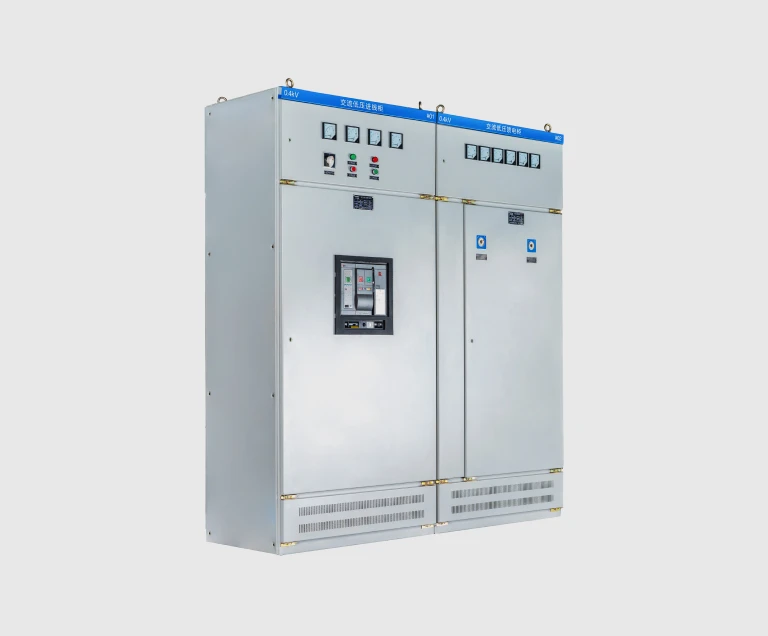
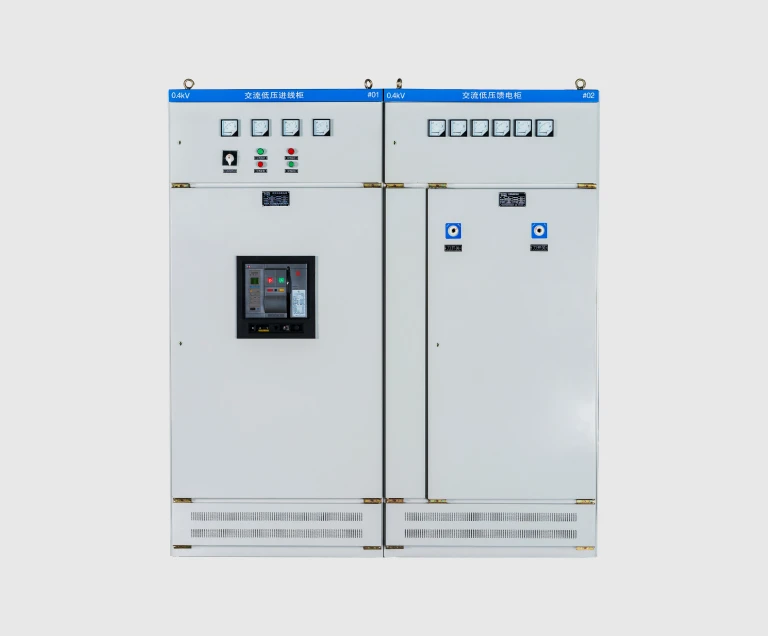
• Incoming ACB main breaker on a withdrawable drawer, typically 1600 A to 6300 A
• Bus coupler (optional) for two-section operation
• Outgoing feeder drawers with MCCB or fuse-switch units feeding downstream sub-distribution
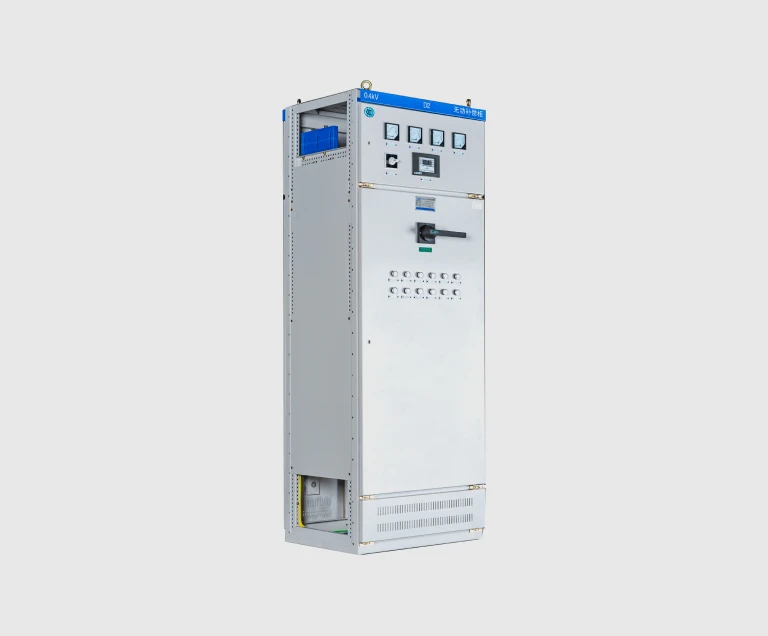
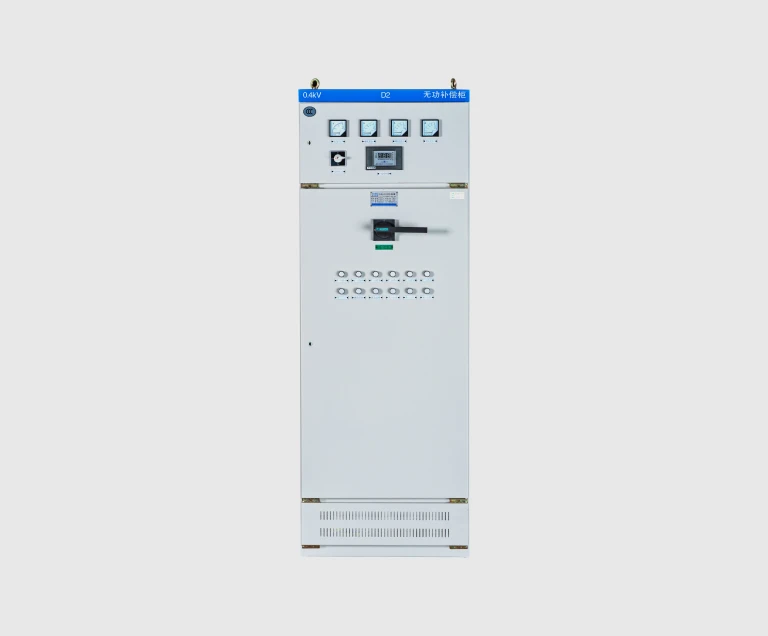
• Capacitor bank drawers for power factor correction
• Measurement and metering panel
Motor Control Center (MCC) configuration:
• ACB main breaker drawer at the incoming side
• Multiple motor starter drawers, one per motor — each containing MCCB + contactor + thermal overload, plus optional soft starter, VFD, or intelligent motor controller
• Drawer size selected per motor rating: 1/8 module for motors below 7.5 kW, larger modules for larger motors
• Control circuit may include PLC, smart relays, or fieldbus interfaces for plant automation integration
Many industrial sites end up with a mix — a Power Distribution line-up at the incoming, with one or more MCC line-ups downstream serving the motor loads in each process area. The GCK platform handles both seamlessly.
How to Specify Withdrawable Low Voltage Switchgear
At the quotation stage, confirm the following. Anything you cannot specify, our engineering team can derive from your single-line diagram and load schedule.
1. Rated operating voltage. 400 V is most common globally; 690 V is used for high-power motor loads in mining and heavy industry.
2. Rated main busbar current. Set by the largest continuous current flowing through the bus, with margin for future growth. Common values: 1600 A, 2500 A, 4000 A; up to 6300 A for the largest substations.
3. Rated short-time withstand current. From the upstream fault-level study, typically the transformer secondary short-circuit current. Up to 50 kA for 1 second covers most distribution-level installations.
4. Form of internal separation. Form 3b is the practical minimum for industrial use; Form 4 or Form 4b is specified where strict safety codes or high-availability requirements apply.
5. Number and type of drawers. List by function: ACB main, bus coupler, outgoing feeders with MCCB ratings, motor starter drawers with motor kW ratings, capacitor banks with kVAR ratings, measurement units.
6. Cable entry direction. Top entry or bottom entry, set by the site cable trench or cable tray layout.
7. Auxiliary supplies. Control voltage (commonly 220 V AC or 110 V DC) and source.
8. Intelligence requirements. Smart motor controllers, Modbus or PROFIBUS fieldbus, integration with plant SCADA or building management system.
Installation and Maintenance
Withdrawable low voltage switchgear is among the most maintenance-friendly electrical equipment in any industrial facility, precisely because of the drawer-type construction. Routine maintenance is:
• Annual visual inspection — check cabinet doors, drawer mechanisms, position indicators, busbar joints visible through inspection windows, and cable terminations for signs of overheating or loosening.
• Thermal imaging under load — scan all busbar joints, ACB contacts, and drawer primary disconnects every 6 to 12 months. Hot spots indicate loose connections that can be tightened during the next planned outage.
• Drawer exercise — drawers that have not been racked for extended periods should be exercised periodically (racked in and out) to keep the mechanism free and the contact wipers cleaning the busbar contacts.
• Contactor and relay testing — motor starter drawers with frequently-operated contactors should be inspected for contact erosion at intervals proportional to operating frequency.
• Insulation resistance check during major outages — verify the busbar and drawer insulation is in good condition.
With this routine, a properly specified GCK switchboard reliably reaches 20 to 25 years of service. The main shell, busbar, and drawer mechanism typically continue in service well beyond that, with individual drawers replaced as they age out — one of the structural advantages of the withdrawable design.