search
Search

Enter keywords to search for products, blog posts, and more.

English
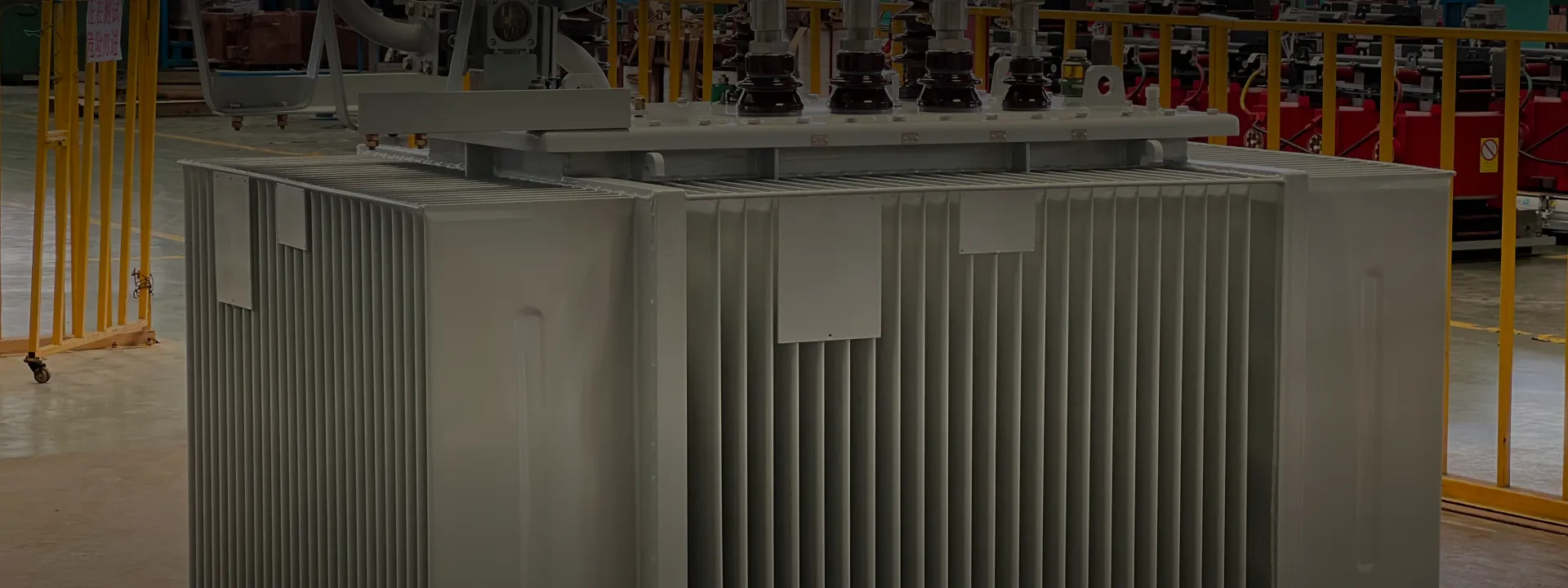
oil immersed
transformer

SF6 Gas Insulated Switchgear

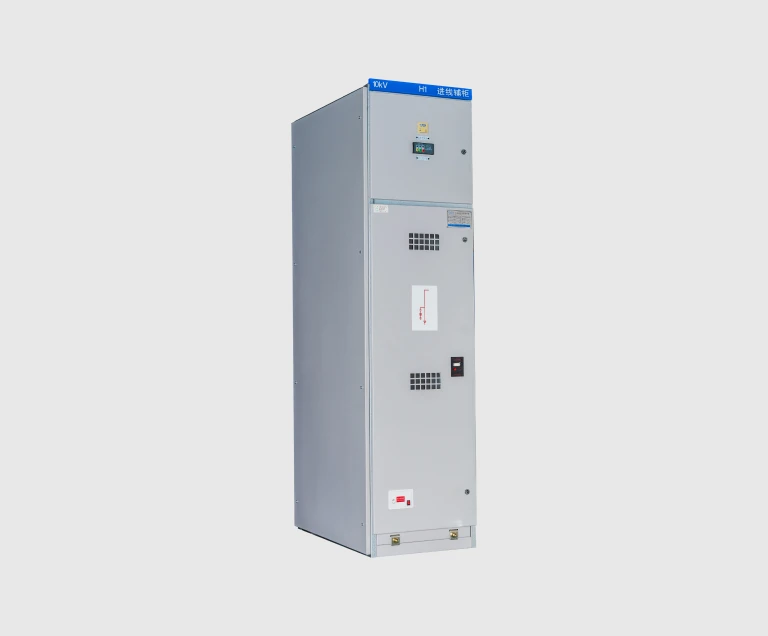
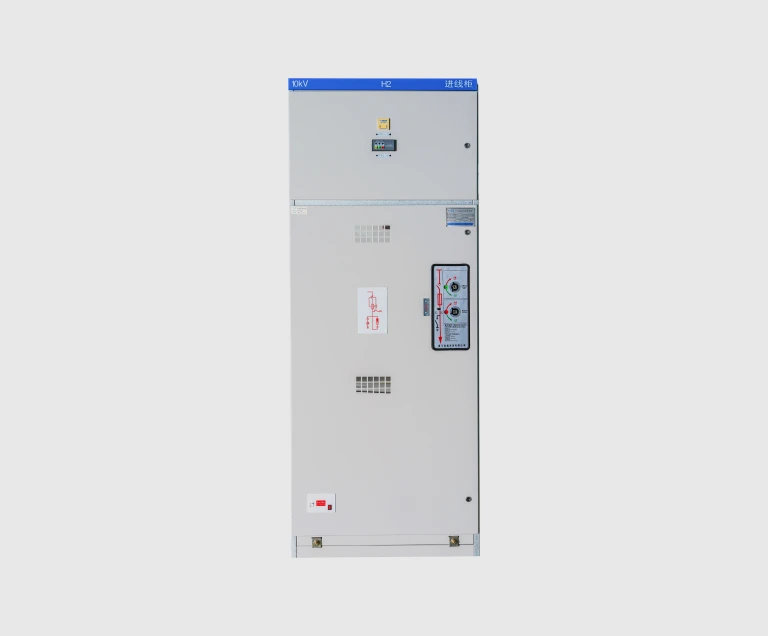
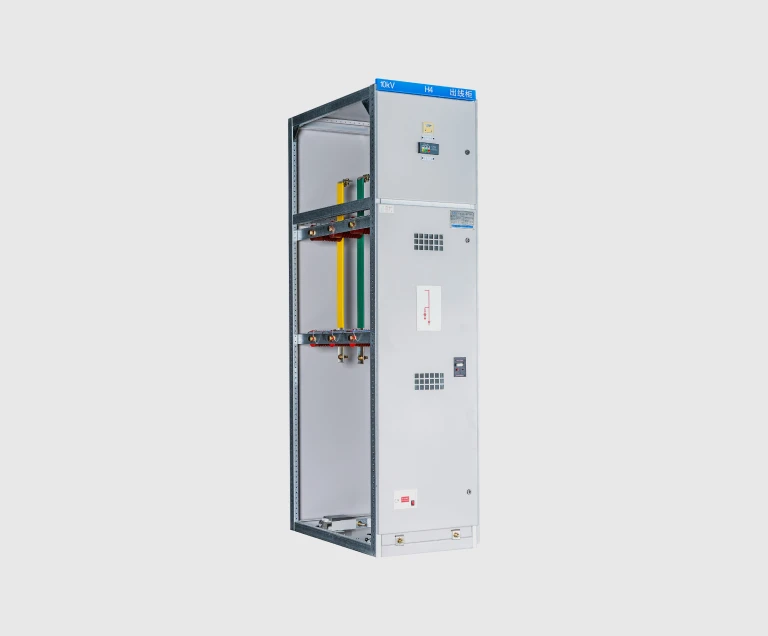
SF6 Gas Insulated Ring Main Unit (HXGN Series) — 12kV to 40.5kV

SF6 Gas Insulated Ring Main Unit (HXGN Series) — 12kV to 40.5kV

SF6 Gas Insulated Ring Main Unit (RMU) HXGN Type Three-Position Load Break Switch Switch-Fuse Combination Sealed-for-Life Tank Indoor IEC 62271-200 50Hz / 60Hz

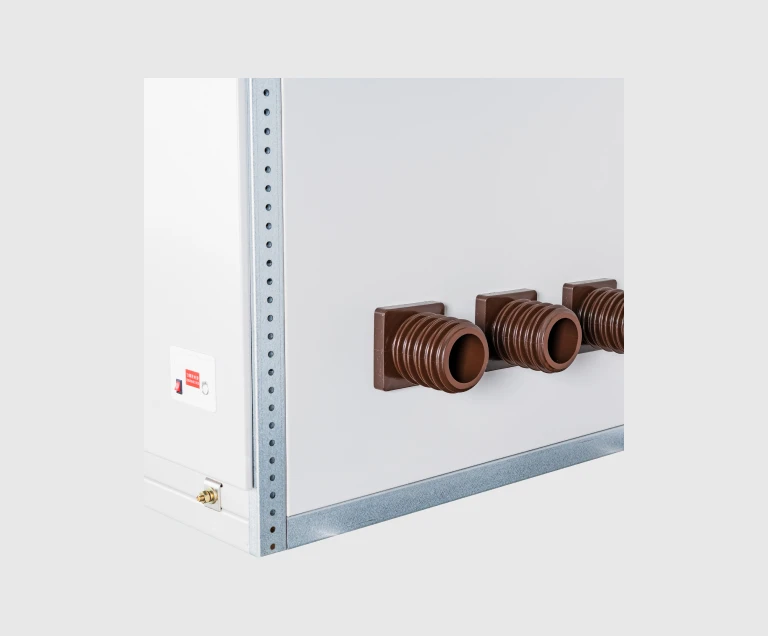
EverWins manufactures SF6 gas insulated switchgear in the HXGN ring main unit (RMU) series, with rated voltages from 12 kV to 40.5 kV and rated main bus currents from 630 A to 1600 A. The switching components — three-position load break switches, earth switches, and where required vacuum circuit breakers — are housed inside a hermetically sealed SS304 stainless steel tank pressurized with SF6 gas. This sealed-for-life design eliminates routine gas handling, keeps the switching contacts in a contamination-free atmosphere, and stays operational through 25+ years of service in environments where air-insulated switchgear would degrade — humid coastal climates, polluted urban substations, and dense industrial sites. Compared to traditional air-insulated switchgear at the same voltage class, an SF6 RMU occupies roughly 50% less floor space, which is why it has become the standard for compact urban substations and integrated package substations. Used for ring main distribution, transformer protection, motor feeder switching, and load isolation in commercial buildings, industrial facilities, mining operations, and renewable generation tie-in stations.


Service & Delivery

• MOQ: 1 functional unit for standard configurations; project lots quoted as RMU line-ups

• Lead time: confirmed at quotation, based on number of functional units, voltage, and protection scheme

• Shipping: FOB, CIF, or DDP terms supported; export-grade packaging with the gas tank fully pre-filled and sealed at factory

• Custom support: single-line diagram review, drawing approval, factory acceptance test (FAT) witness available

• After-sales: technical support via email, phone, or video call; English-speaking engineering team; commissioning guidance

• Warranty: standard manufacturer warranty as detailed in commercial offer

Specifications

ParameterSpecification
Rated Voltage12 kV / 24 kV / 40.5 kV class (covering 10, 11, 20, 22, 33, 35 kV systems)
Rated Frequency50 Hz or 60 Hz
Rated Main Busbar Current630 A / 1250 A / 1600 A
Rated Short-Time Withstand Current20 kA / 4 seconds (12.5 kA / 16 kA / 4 s also available)
Rated Peak Withstand Current50 kA (40 kA also available)
Power Frequency Withstand Voltage (1 min)42 kV (12 kV class) / 50 kV (24 kV class) / 95 kV (40.5 kV class)
Lightning Impulse Withstand Voltage75 kV (12 kV class) / 125 kV (24 kV class) / 185 kV (40.5 kV class)
Switching DeviceThree-position load break switch (closed / open / earthed); vacuum circuit breaker available for protection units
Fuse ProtectionHRC fuses on transformer-protection units (switch-fuse combination per IEC 62271-105)
Insulating MediumSF6 gas, sealed for life
Rated Filling Pressure (gauge, 20 °C)0.04 MPa typical
Gas Tank MaterialSS304 stainless steel, fully welded
Gas Tank SealingHermetically sealed for life; pressure indicator and low-pressure lock-out provided
Cabinet MaterialCold-rolled steel and aluminum-zinc coated (galvalume) steel; SS304 for gas tank
Surface TreatmentPowder coated, colour customizable
Enclosure ProtectionIP3X / IP4X main enclosure; IP65 gas tank
Standard Dimensions (W × D × H)370 – 500 / 800 – 1000 × 850 × 1600 – 2300 mm
StandardsIEC 62271-200; IEC 62271-105 (switch-fuse); IEC 62271-100 (circuit breaker); GB 3906; GB 16926
Service Life (design)25+ years sealed operation, no scheduled gas refilling
Ambient Temperature−25 °C to +40 °C indoor
Altitude≤ 1,000 m standard; derating available for higher altitudes


SF6 Gas Insulated Switchgear Product Range


Sealed-for-Life Stainless Steel Gas Tank

Every HXGN switchgear is built around a single fully-welded SS304 stainless steel gas tank that houses the three-position switches, earthing switches, and busbar — all immersed in SF6 at the rated filling pressure. The tank is leak-tested at factory and sealed for the full design life of the equipment; there is no field gas handling, no scheduled refilling, and no service-life decay of the dielectric strength. Stainless steel resists corrosion in coastal, humid, and chemically aggressive environments where carbon-steel tanks would corrode over time. A factory-fitted pressure indicator on the front panel gives a continuous visual check of the gas pressure, and a low-pressure interlock locks the switch out of service before pressure can fall below the level required for safe interruption.

• SS304 stainless steel gas tank, fully welded, IP65 rated

• Factory leak-tested and sealed at rated SF6 filling pressure

• Pressure indicator visible from the front panel

• Low-pressure lock-out interlock to block operation if gas leaks

• Three-position load break switch — closed, open, earthed — in one mechanism

• Five-point mechanical interlock to prevent the common operator errors

• Cold-rolled steel + aluminum-zinc coated cabinet around the gas tank


Full Testing Before Shipment

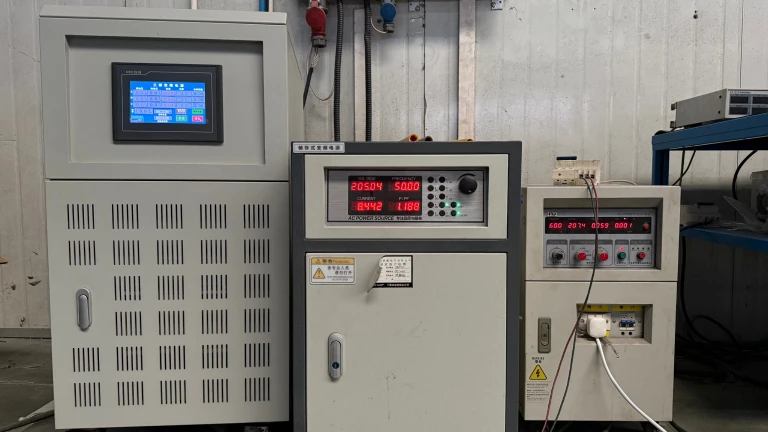
Every HXGN cubicle undergoes routine tests per IEC 62271-200 and GB 3906 before it ships. Electrical tests include power frequency voltage withstand on the main and auxiliary circuits, lightning impulse withstand verification, insulation resistance measurement, mechanical operation tests on the load break switch and earthing switch (closed-open-closed sequence at rated speed), interlock function verification, and operating circuit functional tests at rated control voltage. The SF6 gas tank receives a separate routine sequence: pressure decay leak test at 1.5 times rated pressure, internal partial discharge measurement, and final gas moisture and purity check before sealing. The sealed-for-life tank is then individually serialized and recorded against the test report. All routine test results are documented in a factory acceptance test (FAT) report supplied with the shipment. Customers may witness the FAT in person or by live video link.


Configured to Your Distribution Network

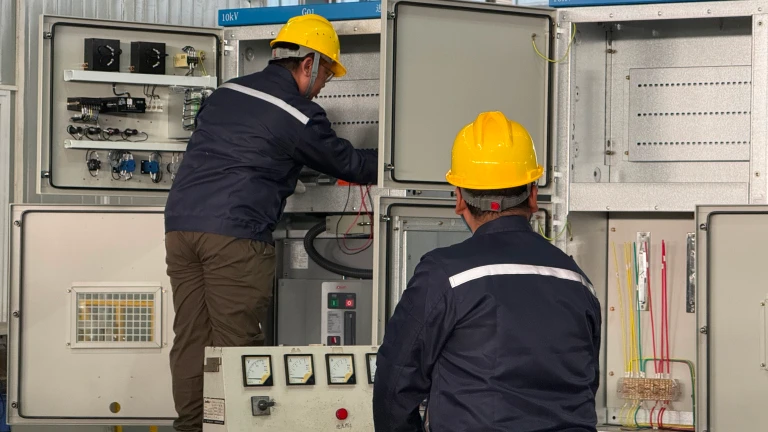
Ring main unit configurations are project-specific by design. A simple two-feeder RMU at a small substation might use only two load-break-switch units. A typical commercial transformer substation needs two cable feeder units plus a transformer protection unit with HRC fuses — the classic "V-V-F" arrangement. A larger industrial substation may require a six-unit line-up with circuit breaker protection on the transformer feeder, dedicated metering compartments, and bus coupler units. We configure each line-up to match your single-line diagram, with the exact mix of cable feeder, switch-fuse transformer protection, circuit breaker, metering, and bus coupler functional units. Cable entry direction, voltage and current transformer ratios, protection relay configuration, and control voltage are all confirmed at order stage. The complete RMU line-up is assembled and pre-commissioned at our factory before shipment, so the units arrive on site ready to bolt together and energize.

More About everwins

EverWins is a transformer, switchgear and substation manufacturer based in Guangdong, China. With 30 years in the power transmission and distribution industry and a 70,000m² production facility, we supply factory-direct to projects in over 30 countries.

About Us Certifications Solutions

FAQs

What is the difference between SF6 gas insulated switchgear and air-insulated switchgear?

What is a Ring Main Unit (RMU), and how is it different from metal-clad switchgear?

Both perform the same electrical function — receive, switch, and distribute medium voltage power — but they use a different dielectric to insulate the live parts. Air-insulated switchgear (AIS) uses ambient air, which requires larger physical clearances between phases and to ground; a 12 kV AIS cubicle typically needs about double the footprint of a 12 kV SF6 unit. SF6 gas insulated switchgear (GIS) uses SF6 inside a sealed tank, with much higher dielectric strength per unit of clearance, allowing the live parts to sit much closer together. The trade-off is that SF6 is a fluorinated gas and is subject to regulated handling at end-of-life. EverWins HXGN units are sealed-for-life with no scheduled gas refilling, which keeps the gas contained for the full service life.

What is inside an SF6 ring main unit cubicle?

"Ring Main Unit" describes a switchgear topology, not an insulation technology. An RMU is designed to be connected into a ring main distribution network — a closed loop of cable from substation to substation, with each RMU acting as both an in-feed and out-feed point. If one cable section faults, power continues to feed through the other side of the ring. Metal-clad switchgear (KYN-type) is a different construction class: larger, with withdrawable circuit breakers in separate compartments, and used for primary distribution at higher fault currents. RMUs typically use load break switches (rated for normal switching, not fault interruption) combined with fuses or backup circuit breakers, and are physically smaller and more compact. RMUs and metal-clad switchgear are often deployed in the same substation — metal-clad for primary distribution, RMU for the secondary ring main.

Why does SF6 gas insulated switchgear save 50% of substation space?

Inside each HXGN cubicle, the main switching components sit inside a single welded stainless steel tank filled with SF6 gas. The standard switching device is a three-position load break switch — its three positions are closed (current flowing), open (circuit isolated), and earthed (live parts safely connected to ground for maintenance). The same mechanism handles all three states, which physically prevents the operator from closing onto a still-earthed circuit. For transformer protection units, the load break switch is combined with HRC fuses (per IEC 62271-105 switch-fuse combination standard) to provide short-circuit protection. For larger feeder protection, a vacuum circuit breaker inside the SF6 tank replaces the fuse arrangement. The SF6 gas itself never leaves the tank during normal operation; it is sealed at factory and stays at the rated pressure for the design life of the equipment.

What is the service life of SF6 gas insulated switchgear?

The answer is dielectric strength per millimeter of clearance. Air at standard pressure has a dielectric strength of about 3 kV/mm; SF6 at the typical filling pressure of 0.04 MPa has roughly two to three times that — enough that the phase-to-phase and phase-to-ground clearances inside an SF6 tank can be reduced by roughly half compared to an air-insulated cubicle of the same voltage class. The smaller clearances translate directly to smaller cubicle width and depth, and the typical line-up footprint comes out to about half the floor space of an equivalent AIS line-up. The space savings is the single biggest reason SF6 GIS dominates urban substation design where building cost per square meter is high.

SF6 as an Insulating Gas — Why It Is Used in Medium Voltage Switchgear

Sulfur hexafluoride (SF6) is a colorless, odorless, non-toxic, non-flammable gas that has been used as a high-voltage dielectric since the 1960s. The properties that make it valuable for switchgear are its dielectric strength (roughly two to three times that of air at the same pressure), its arc-quenching ability (a hot SF6 arc cools and recombines very quickly when the current crosses zero), and its chemical stability — SF6 does not break down, corrode metal parts, or react with insulating materials inside a sealed enclosure. These properties allow SF6 switchgear to be built much more compactly than air-insulated equivalents while still meeting the same voltage withstand and short-circuit ratings.

Modern SF6 gas insulated switchgear for medium voltage distribution uses a sealed-for-life design philosophy: the gas is filled at factory, the tank is welded shut, and the equipment operates for its full service life without the operator ever handling the gas. This is fundamentally different from earlier-generation SF6 equipment that required field filling and periodic top-up. The sealed-for-life approach addresses both reliability concerns (no field contamination, no human error in gas handling) and environmental concerns (no leakage path under normal operation).

SF6 GIS vs Ring Main Unit — Insulation vs Topology

These two terms are often used together but describe orthogonal characteristics of medium voltage switchgear.

SF6 GIS describes how the switchgear is insulated — the live parts sit inside a tank filled with SF6 gas instead of in open air. SF6 GIS is a category that includes everything from compact medium voltage distribution switchgear up to multi-hundred-kV transmission GIS in utility substations.

Ring Main Unit describes how the switchgear is connected into the distribution network. An RMU is purpose-built for ring main distribution — a closed loop of medium voltage cable feeding a series of distribution substations, with each substation containing one RMU that can switch its local transformer in and out of the ring. RMUs can be air-insulated, SF6-insulated, or solid-insulated; the topology is independent of the insulation choice.

EverWins HXGN switchgear is both: SF6 insulated and built as a ring main unit. The combination is by far the most common configuration for medium voltage secondary distribution worldwide because it pairs the space efficiency of SF6 insulation with the network resilience of ring main topology.

Inside a Ring Main Unit — Functional Unit Types

An RMU line-up is built from a mix of standardized functional units. Each unit handles a specific job and has a different cubicle width. The most common functional units in the HXGN range are:

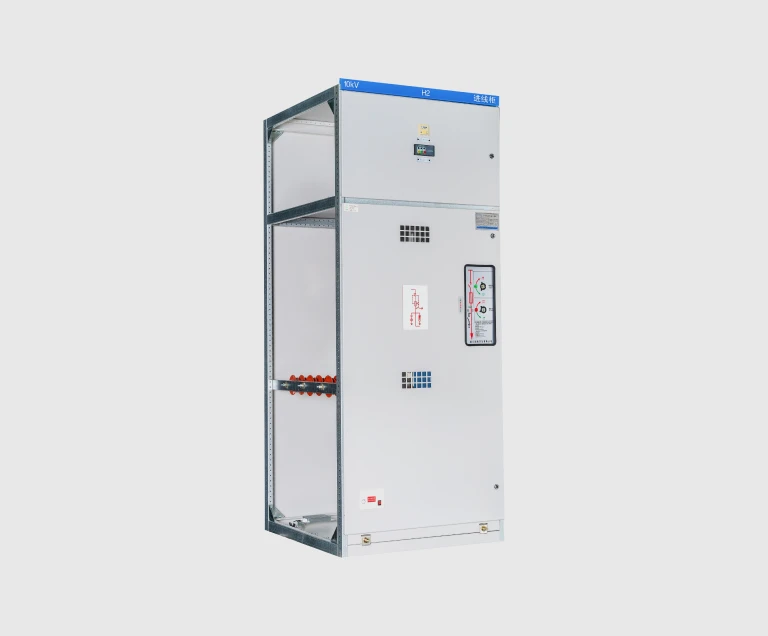
Cable feeder unit (V or L unit) — a load break switch and earthing switch for one cable feeder. Used as the in-feed and out-feed connections to the ring main cable. Narrowest cubicle in the line-up, typically 370 mm wide.

Transformer protection unit (F unit) — a load break switch combined with three HRC fuses (one per phase) per IEC 62271-105. Used to feed and protect a single distribution transformer. Wider than the cable unit to house the fuses, typically 500 mm wide. The fuses provide short-circuit protection; the load break switch handles normal switching and earthing.

Circuit breaker unit (C unit) — a vacuum circuit breaker inside the SF6 tank, used where the protection requirement exceeds what fuses can provide (large transformer feeders, motor feeders, capacitor bank protection). Equipped with overcurrent and earth-fault relaying. Typically 800 mm wide.

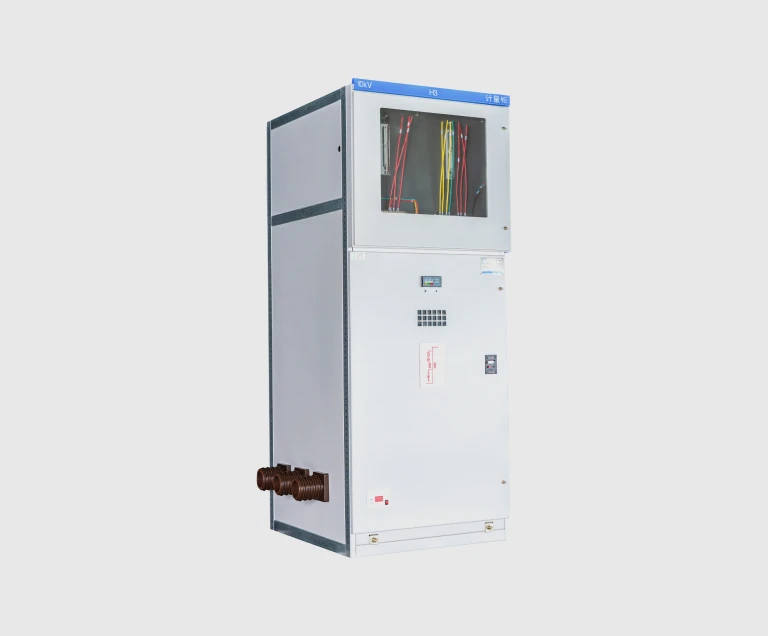
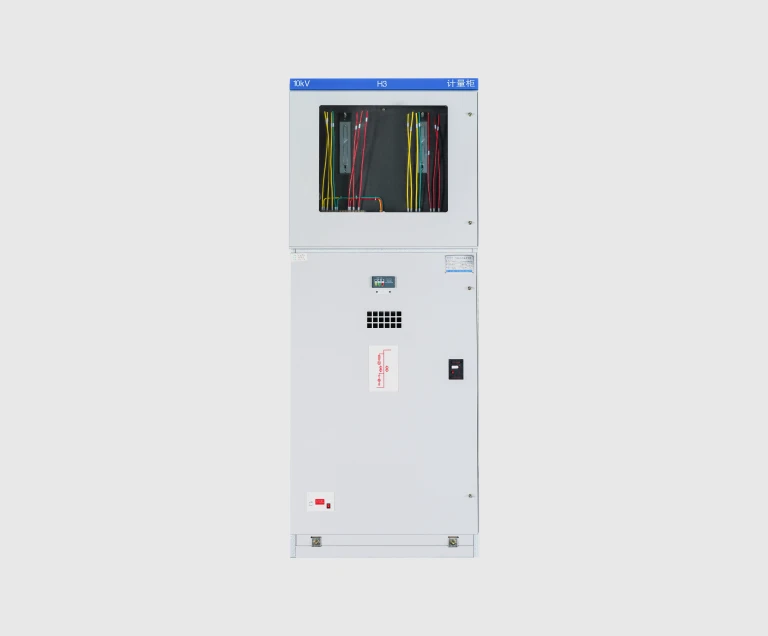
Metering unit (M unit) — voltage and current transformers feeding revenue or check metering. Used at utility connection points and on the secondary side of distribution transformers.

Bus coupler / bus section unit — used in larger RMU line-ups with two main busbars to split or couple the buses, supporting maintenance switching without losing service to either side.

A small substation might use just three functional units in a V-F-V arrangement: two cable feeders flanking a transformer protection unit. A larger substation can run twelve or more units.

Load Break Switch + Fuse vs Vacuum Circuit Breaker — When to Use Each

RMU protection comes in two configurations and the choice depends on the load profile and fault current.

Switch-fuse combination uses a load break switch to handle normal switching duty (closing and opening rated load current) and HRC fuses to clear short-circuit faults. HRC fuses are very fast — current-limiting fuses operate in under 10 milliseconds on a high fault current — and they are inherently coordinated with the downstream low-voltage protection. The trade-off is that fuses are single-shot devices: after a fault clears, all three fuses must be replaced (even if only one operated) to avoid the next fault landing on an unbalanced phase set. Switch-fuse combinations are economical and the standard choice for transformers up to about 1,250 kVA at 12 kV.

Vacuum circuit breaker units use a fully-rated breaker capable of switching both normal load current and short-circuit fault current, with proper relay protection coordinating the trip. The breaker can be re-closed and tested after a fault without replacing parts. CBs are required for transformers above ~1,600 kVA, for motor feeders where frequent switching is needed, and for any feeder where relay coordination with upstream protection is critical. The trade-off is higher initial cost and a wider cubicle.

Most substations end up with a mix — switch-fuse units for the standard distribution transformers and a vacuum circuit breaker unit for the incoming feeder or the largest transformer.

HXGN Type Designation

Chinese GB 3906 uses a type code system that encodes the cubicle's construction class, mounting style, installation environment, and voltage rating. The HXGN prefix used on EverWins SF6 RMUs breaks down as:

H — Hézhuāng (盒装), meaning box-type or compartment-type construction. The cubicle is built around a sealed compartment rather than open framework.

X — Xiāng (箱), reinforcing the box / cabinet construction.

G — Guī (柜), cabinet.

N — Nèibù (内部), indoor service.

The number after the prefix (12, 24, 40.5) is the rated voltage class. So HXGN-12 is an indoor box-type cabinet switchgear rated 12 kV, and HXGN-40.5 is the same family at 40.5 kV. The HXGN designation maps directly onto the IEC 62271-200 description: LSC2 service-continuity category with a sealed gas-tight compartment, the standard construction class for medium voltage secondary distribution worldwide. (The XGN designation without the leading H usually refers to air-insulated fixed switchgear; EverWins SF6 product uses HXGN, where the H signals the sealed compartment construction.)

How to Specify an SF6 Ring Main Unit

At the quotation stage, confirm the following. Anything you cannot specify, our engineering team can derive from your single-line diagram and protection schedule.

1. Rated voltage class. 12 kV for 10/11 kV systems, 24 kV for 20/22 kV systems, 40.5 kV for 33/35 kV systems.

2. Number and function of cubicles. List the line-up by functional unit type: cable feeder, switch-fuse transformer protection, circuit breaker, metering, bus coupler. The single-line diagram defines this directly.

3. Rated main bus current. Set by the largest continuous current flowing through the bus. 630 A is most common; 1250 A for higher-load substations.

4. Rated short-time withstand current. From your fault-level study; 20 kA for 4 seconds covers the great majority of medium voltage distribution. Higher values available on request.

5. Transformer fuse rating (for switch-fuse units). Sized to the transformer rated current with current-limiting fuse curves coordinated with the downstream LV protection.

6. Cable entry direction. Bottom entry is standard; top entry available where the substation layout requires it.

7. Relay scheme (for circuit breaker units). Overcurrent, earth fault, and where applicable transformer differential or sensitive earth fault.

8. Auxiliary supplies. Control voltage (commonly 110 V DC, 220 V DC, or 220 V AC) and source. Some HXGN units operate fully mechanically without auxiliary power.

Maintenance and Service Life

SF6 gas insulated switchgear is among the lowest-maintenance medium voltage equipment available. The sealed stainless steel tank keeps the switching contacts, busbars, and earthing switch in a contamination-free atmosphere, so there is no dust ingress, no moisture absorption, and no oxidation of the contact surfaces. Routine maintenance reduces to:

• Annual visual inspection — check the SF6 pressure indicator, confirm the position indicator matches the operating state, inspect bushings and cable terminations for damage or pollution.

• Annual mechanical operation test — operate the load break switch and earthing switch through their full sequence to confirm the mechanism remains free.

• Three- to five-yearly interlock function test — verify the five-prevention mechanical interlocks and the low-pressure lock-out.

• Periodic relay testing — for circuit breaker units, secondary injection of the protective relays at the interval specified by the protection coordination study.

• Infrared scan of external bus connections under load — catches loose terminations before they fail.There is no scheduled SF6 gas handling under normal operation. If the pressure indicator shows a slow loss over years of service (an indication of gasket leakage), the unit should be returned to the factory for repair and re-sealing rather than topped up in the field. With this routine, a properly specified HXGN unit reliably delivers the 25+ year design life, often longer in protected indoor environments.